
Corporate Office:
20 Corporate Park Drive, Suite 150
Pembroke MA 02359
Cambridge, MA Office:
2534 Massachusetts Ave,
Cambridge, MA 02140
August 17, 2026
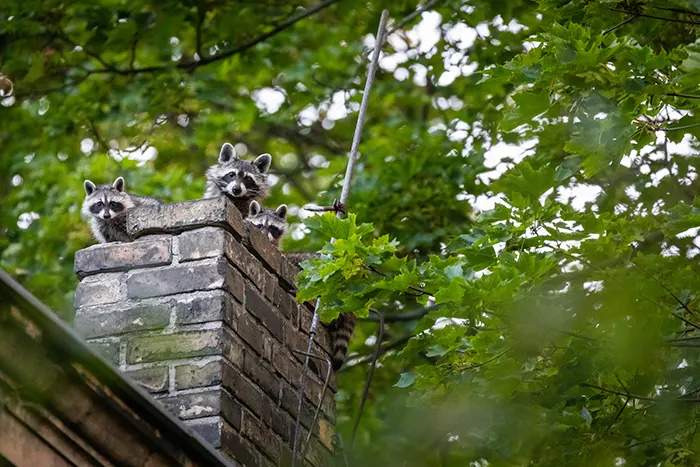
Raccoons are resourceful animals that can find their way into surprisingly small spaces, including chimneys. An open or damaged chimney can provide a warm, sheltered place for raccoons to rest or raise their young. Once inside, they may cause property damage, create unpleasant odors, and leave behind droppings and other debris.
Raccoons are excellent climbers and can easily scale roofs, trees, gutters, and other structures to reach a chimney. They may enter through an uncapped chimney, damaged chimney cover, loose flashing, or other openings. In some cases, raccoons may also damage weak materials to create an entry point.
Chimneys can be especially attractive during nesting season because they offer a dark, protected space away from predators and harsh weather. If you hear scratching, thumping, or unusual noises coming from your chimney, a raccoon or other wildlife may have moved in.
The best way to prevent chimney wildlife problems is to make the chimney less accessible. A professionally installed, wildlife-safe chimney cap can help block raccoons and other animals while still allowing proper ventilation. Homeowners should also inspect the roof and chimney regularly for damaged covers, loose materials, and potential entry points.
If a raccoon is already inside, avoid trying to remove it yourself—especially if young animals may be present. Disturbing a mother raccoon can create additional problems and may result in damage as she attempts to escape.
If you suspect raccoons have entered your chimney, attic, or home, Secured Environments Pest and Wildlife Services can help identify the entry point and develop an appropriate wildlife control solution. Professional removal and exclusion can help protect your home while addressing the problem safely and effectively.
Don't wait for chimney wildlife to become a bigger problem. Contact Secured Environments Pest and Wildlife Services for professional raccoon control and wildlife exclusion services.
*are required fields